Tag: NHS Pharmacy

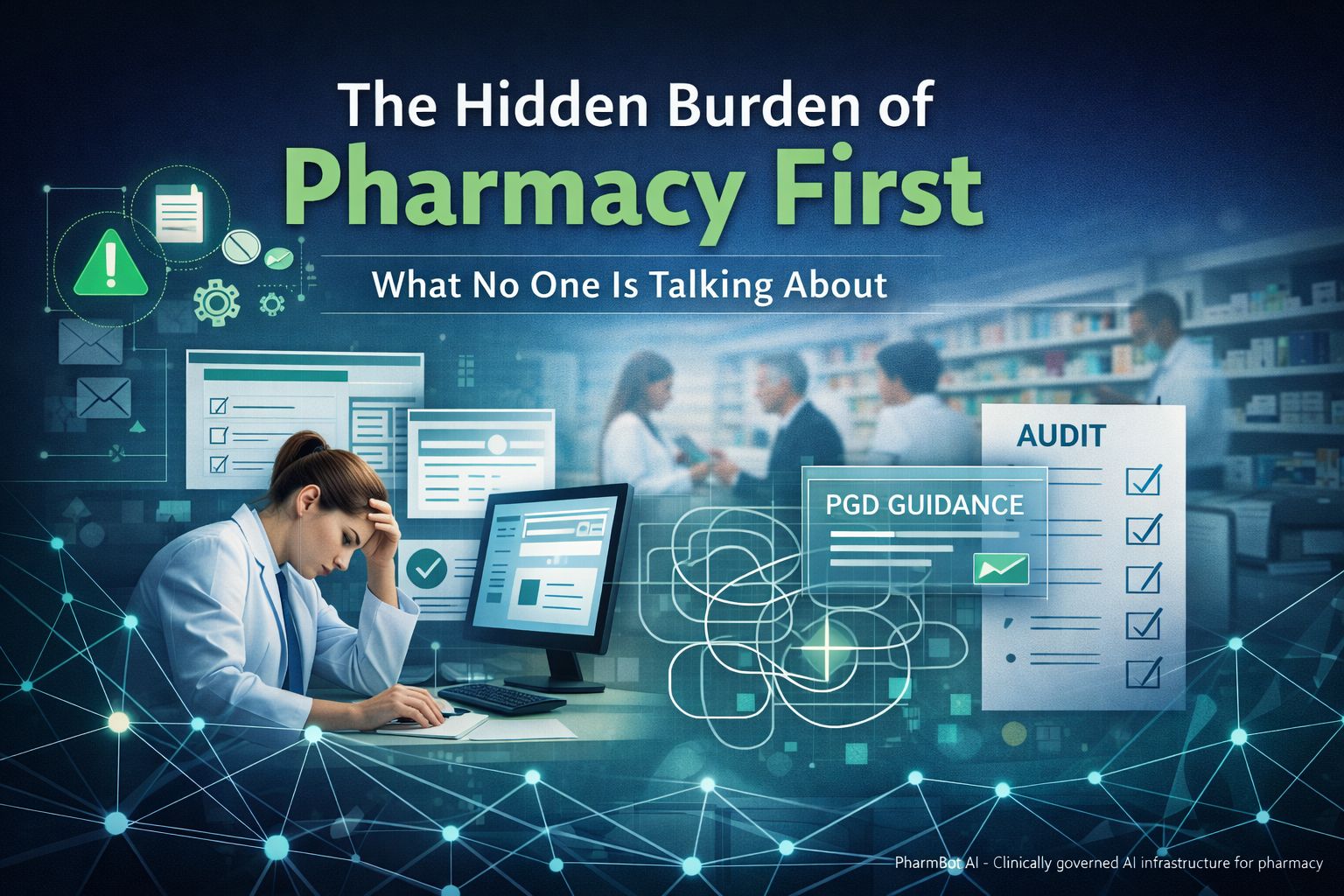
  • The Hidden Burden of Pharmacy First –  What No One Is Talking About

    The Hidden Burden of Pharmacy First –  What No One Is Talking About

    Pharmacy First is the right policy – but the wrong conversation

    Pharmacy First is one of the most significant shifts in community pharmacy in a generation. It formally recognises what pharmacists have been doing for years: delivering accessible, front-line clinical care.

    On paper, it’s a win for patients, pharmacists, and the NHS.

    But on the ground, a quieter reality is emerging, one that isn’t being discussed openly enough.

    Pharmacy First isn’t failing because pharmacists lack capability or motivation.
    It’s struggling because the operational and cognitive burden placed on pharmacies has been underestimated.

    And unless that burden is addressed, Pharmacy First risks becoming another well-intentioned service that never fully scales.

    The burden isn’t clinical – it’s infrastructural

    Most commentary focuses on clinical pathways, inclusion criteria, and remuneration. Those matter  but they are not the core problem.

    The real burden sits elsewhere:

    • Cognitive load during consultations
    • Fragmented workflows across multiple systems
    • Documentation pressure under time constraints
    • Clinical accountability without proportional support
    • Audit anxiety in a heavily regulated environment

    Pharmacists are being asked to deliver more clinical services, at higher frequency, with the same physical infrastructure and largely the same digital one.

    That mismatch is where friction appears.

    What a Pharmacy First consultation actually looks like

    In reality, a Pharmacy First consultation is not a simple checklist exercise.

    A pharmacist must simultaneously:

    • Interpret eligibility and red-flag criteria
    • Apply PGDs accurately
    • Maintain clinical judgement
    • Document decisions defensibly
    • Manage time pressure
    • Protect patient safety
    • Remain audit-ready

    All while working in busy, interruption-heavy environments.

    This is complex clinical cognition, compressed into short appointment windows.

    The policy acknowledges this complexity.
    The infrastructure largely does not.

    Why adding “tools” isn’t enough

    Most digital responses to Pharmacy First have focused on tools:

    • Templates
    • Forms
    • Checklists
    • Standalone apps

    These help  but they don’t solve the underlying issue.

    Tools still require the pharmacist to:

    • Remember what applies
    • Interpret guidance in real time
    • Carry the full cognitive and legal load
    • Context-switch repeatedly between systems

    In other words, tools digitise paperwork, they don’t reduce burden.

    What’s missing is something deeper.

    The missing layer: clinical AI infrastructure

    Pharmacy First doesn’t need more apps.
    It needs clinical infrastructure that sits underneath services and supports them safely.

    That infrastructure should:

    • Embed clinical logic into workflows
    • Surface relevant guidance at the point of care
    • Maintain human-in-the-loop control
    • Create defensible audit trails automatically
    • Preserve pharmacist ownership of decisions

    This is not about replacing pharmacists.

    It’s about supporting clinical judgement at scale without increasing risk.

    Why this matters for safety, not just efficiency

    When cognitive load rises, risk rises with it.

    Not because pharmacists are careless  but because humans operating under sustained pressure are more vulnerable to error.

    If Pharmacy First is to expand safely:

    • Across more conditions
    • Across more pharmacies
    • Across more patients

    Then risk must be managed structurally, not informally.

    Clinical AI infrastructure allows:

    • Consistency without rigidity
    • Support without automation creep
    • Oversight without surveillance

    Done correctly, it reduces both clinical risk and professional anxiety.

    What this enables next

    If the right infrastructure is in place, Pharmacy First becomes a foundation not a ceiling.

    It enables:

    • Faster onboarding of new services
    • More consistent national delivery
    • Better outcome measurement
    • Stronger commissioning confidence
    • Future integration with prescribing, diagnostics, and referrals

    Without it, every new service adds friction rather than momentum.

    A quiet truth worth saying out loud

    Pharmacists are not resisting Pharmacy First.

    They are absorbing its weight.

    And many are doing so silently, because professionalism often looks like coping.

    If we want Pharmacy First to succeed long-term, we must stop asking pharmacists to carry system-level complexity alone.

    The solution is not more resilience.  It’s better infrastructure.

    About PharmBot AI

    PharmBot AI is building clinically governed AI infrastructure designed specifically for pharmacy – supporting services like Pharmacy First while preserving safety, accountability, and professional ownership.

    Not as a chatbot.

    Not as a shortcut.

    But as infrastructure fit for regulated clinical care.
  • AIVAe Shortlisted for the HSJ Partnership Awards 2026 – Building the Future of AI-Enabled Pharmacy

    AIVAe Shortlisted for the HSJ Partnership Awards 2026 – Building the Future of AI-Enabled Pharmacy

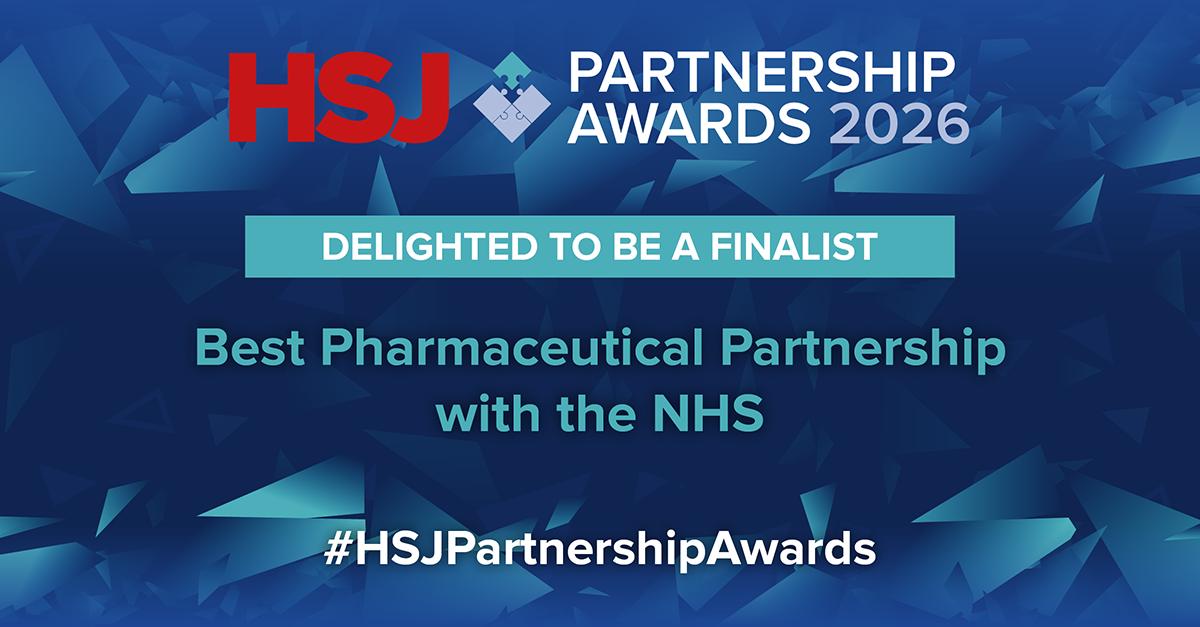
    I’m incredibly proud to share that our work at PharmBot AI has been shortlisted for the Best Pharmaceutical Partnership with the NHS at the 2026 HSJ Partnership Awards for our project:

    AIVAe – Building the Future of AI-Enabled Pharmacy Partnerships.

    This is a significant moment for our mission, not because of the award itself, but because of what it represents: recognition from across the NHS that responsible AI and clinical pharmacy expertise can work together to support safer, smarter medicines optimisation.

    And importantly – this nomination isn’t mine alone. It reflects the contributions of UK pharmacy networks, NHS partners, clinical leaders and frontline pharmacists who have worked with us to build AIVAe from concept to real-world deployment.

    Why This Matters Now

    Across the NHS, pharmacy teams are facing new levels of clinical demand, unprecedented workload pressure, and a growing need for consistent, evidence-based decision support. The expansion of clinical services, evolving medicines guidance, and increased complexity of care all point to the same conclusion:

    We need new models of support to protect patient safety and enable pharmacists to work at the top of their licence.

    AIVAe was built to meet that need.

    Not as a replacement for pharmacists – but as a clinical assistant, designed to streamline the routine, evidence-heavy parts of medicines optimisation so people can focus on patients, not paperwork.

    A Partnership Approach – Not Just a Platform

    From day one, the aim wasn’t to “launch a product into the NHS”.

    It was to build a partnership model.

    AIVAe was co-designed:

    • with pharmacy networks, who shaped the clinical use cases
    • with NHS stakeholders, who supported governance, safety and assurance
    • with practising pharmacists, whose feedback shaped every iteration

    That partnership approach has been critical. It has shaped:

    • how AIVAe supports decision-making
    • how governance is embedded
    • how recommendations are surfaced
    • how automation integrates into real workflows
    • how safety controls are applied
    • how the system scales responsibly within NHS environments

    The result is a responsible, governed AI tool that supports — rather than disrupts — the clinical role of pharmacists.

    Evidence of Real-World Impact

    We know that innovation only matters if it delivers measurable value.

    Early deployments across our UK pharmacy network have shown:

    • reduced routine clinical workload
    • faster access to relevant guidance
    • more standardised medicine optimisation checks
    • increased confidence for frontline pharmacists
    • strengthened patient safety processes

    This isn’t theory. It’s evidence from real pharmacies, working with real pressure — and achieving meaningful improvements in workflow and governance.

    A Moment for Pharmacy

    Being shortlisted for the HSJ Partnership Awards tells us something important:

    The NHS sees AI-enabled pharmacy as part of its future.

    Not as a distant vision, but as a practical way to reduce pressure, support clinical decision-making, and strengthen medicines safety right now, inside the existing system.

    For the pharmacy profession, this is a key moment.

    It shows that the sector is ready to adopt innovation that protects clinical judgement, reinforces governance, and reduces workload safely.

    My Personal Reflection

    When I first founded PharmBot AI, the goal was simple: to build tools that support pharmacists in the places where time, information and safety pressures converge.

    Over time, that simple goal has grown into a wider mission — to develop the first true AI-enabled pharmacy model, built around partnership, evidence and responsibility.

    To see that mission recognised by HSJ is something I’m deeply proud of — not for me, but for everyone who believes in the future of this profession.

    Innovation in pharmacy will not be defined by technology alone — it will be defined by the way we work together to make that technology safe, useful and trusted.

    What Happens Next

    The final presentation to the judging panel takes place in January, and the winners will be announced on 19 March 2026 at Evolution London.

    Between now and then, our focus remains exactly the same:

    • supporting our pharmacy network
    • strengthening governance
    • collecting outcome evidence
    • working with NHS partners
    • listening to pharmacists
    • improving through real-world use

    AIVAe is still early in its journey. But this nomination shows that we’re building on the right foundations.

    Thank You

    To everyone in our pharmacy network, NHS collaborators, advisors and clinical colleagues — thank you for your support, challenge and partnership.

    AIVAe is the product of your experience, your feedback and your ambition for what pharmacy can become.

    And to the HSJ judges — thank you for recognising the value of a responsible, partnership-led approach to AI in healthcare.

    If you’d like to understand more about AIVAe, our approach to governance, or opportunities to collaborate, please feel free to connect or reach out directly.

    — Asif